
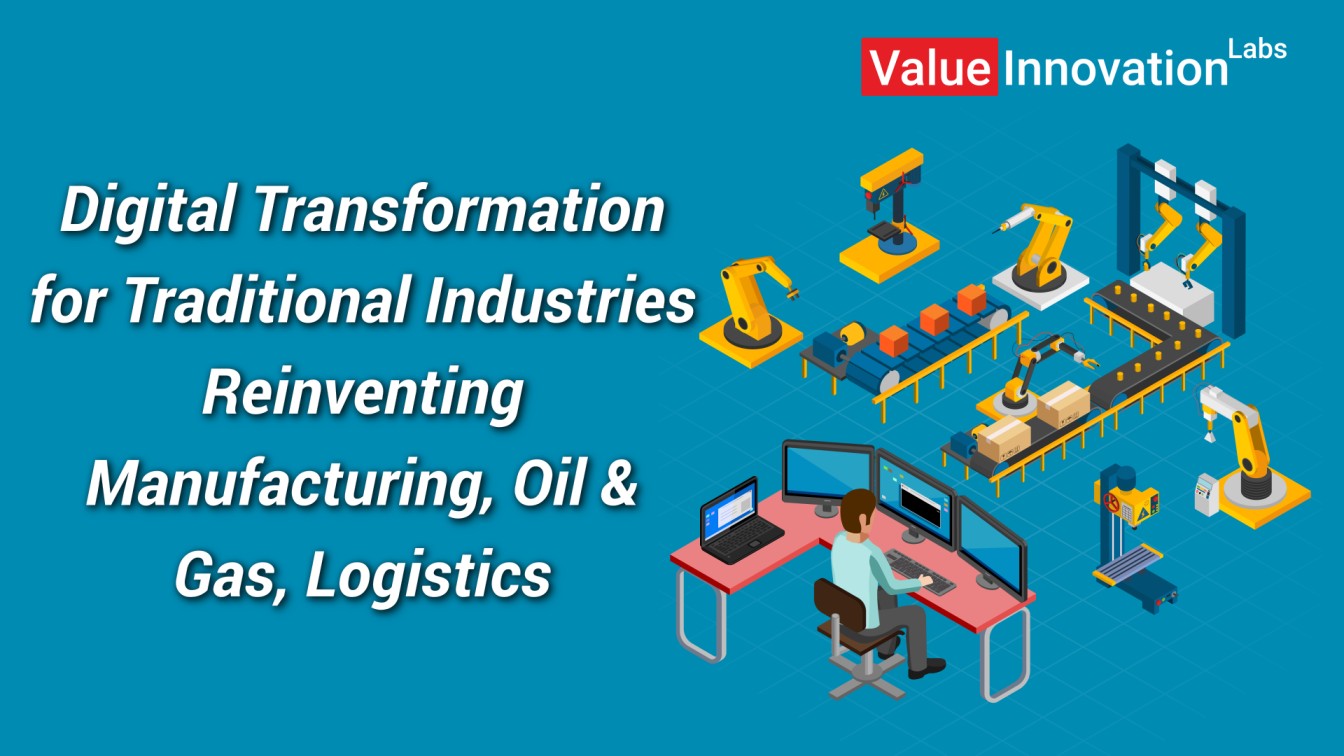
Digital Transformation for Traditional Industries — Reinventing Manufacturing, Oil & Gas, Logistics
Whenever people talk about digital transformation in traditional industries, the conversation usually sounds more glamorous than the actual reality. Anyone who has ever worked in manufacturing, oil & gas, or logistics knows that these sectors don’t wake up one morning and say, “Let’s modernise everything.” Most teams already operate with tight schedules, older systems, and people who’ve worked on the same machines or rigs for 10–20 years. So transformation here doesn’t look like glossy case studies it looks more like slow, steady upgrades that help people breathe a bit easier at work.
But still, things are changing. Maybe not everywhere, maybe not equally, but the push is strong. Market pressure, rising costs, unpredictable supply chains, and the sheer need for reliability are nudging companies toward digital tools. And it’s not really about technology it’s mostly about reducing the daily firefighting that everyone is tired of.
Manufacturing: Trying to Fix What Has Been Ignored for Years
Walk into any traditional factory and you’ll feel a peculiar mix of discipline and chaos. Machines follow strict cycles, but the people running them often depend on memory, instinct, and a lot of improvisation. Some machines don’t even have proper digital logs. Operators often know the “mood” of a machine better than the system does.
This is where digital transformation actually feels useful not as an overhaul, but as a support system.
Small sensors that show when a machine is heating too much.
Dashboards that tell supervisors which section is slowing down.
Simple digital work instructions instead of crumpled paper sheets taped on walls.
You don’t need a futuristic “smart factory.” You just need systems that help the floor teams see what’s happening in real time. Most manufacturing problems are not complicated—they’re just hidden. Once data flows properly, half the confusion disappears. And to be honest, workers appreciate tools that reduce uncertainty, especially when breakdowns can ruin an entire shift.
Oil & Gas: Where Digital Helps More Than It Disrupts
People outside the industry don’t realise how much stress oil & gas teams operate under. Remote rigs, unpredictable conditions, safety risks, and regulations that never stop changing. For a long time, companies were hesitant to introduce digital tools because the stakes are too high nobody wants experimentation in hazardous zones.
But ironically, digital adoption has made operations calmer. Not easier, but calmer. Engineers can see pressure changes, temperature spikes, or flow issues much earlier because sensors don’t get tired or distracted. Remote monitoring means fewer risky physical inspections. Drones catch pipeline cracks faster than manual teams. And AI-based alerts don’t replace experts they just tell them, “Look here first.”
Oil & gas companies aren’t transforming for trend’s sake. They’re transforming because real-time data reduces uncertainty, and uncertainty has always been the biggest enemy in this sector.
Logistics: The Sector That Has No Patience for Delays Anymore
Logistics has always been a mix of planning and pure luck. A truck stuck in a jam throws off the entire schedule, rails run late, ports get congested, weather changes, paperwork gets misplaced—it’s a constant juggling act. Yet many logistics operations still rely on phone calls, WhatsApp updates, and spreadsheets that aren’t updated on time.
Digital transformation here isn’t dramatic. It’s more like tightening loose bolts.
Live tracking so dispatch teams stop guessing.
Digital proof-of-delivery so clients don’t argue.
Automated routing so drivers don’t waste fuel.
Warehouse scanners so items don’t mysteriously “go missing.”
And the interesting part is: logistics shows improvement faster than most industries. One small digital tweak can cut hours of delay, and that directly impacts revenue. Teams appreciate tools that simply tell them what’s happening without chasing five people for updates.
A Thread That Connects All Three
If you strip away the differences, traditional industries basically struggle with the same problem: too much information scattered across too many places. That’s why digital transformation feels refreshing. It collects the pieces and gives people a clearer picture of what’s going on.
It’s not magic.
It’s not instant.
But it removes the guesswork.
And the moment guesswork reduces, stress reduces. Mistakes reduce. Costs reduce. Most leaders don’t want innovation they want predictability. Digital tools, when implemented sensibly, offer exactly that.
Where Value Innovation Labs Makes a Practical Difference
Many companies hesitate to start because they imagine transformation as a huge, disruptive project where everything changes at once. But the approach doesn’t need to be dramatic. What Value Innovation Labs usually does is help organisations modernise without disturbing everyday operations.
Sometimes it’s as simple as integrating two systems that never “spoke” to each other.
Sometimes it’s adding IoT sensors to older machines.
Sometimes it’s helping leadership see which workflows are slowing everyone down.
The idea is to solve real issues, not impose unnecessary tech. Adoption becomes easier when people actually feel the benefits instead of just hearing about them in presentations.
Looking Ahead: One Step At a Time
Traditional industries may not transform as loudly as tech companies, but they transform with purpose. Slowly, steadily, and often out of necessity. The companies that succeed are usually the ones that start small maybe one workflow, one machine, one department and build from there.
Digital transformation isn’t a switch. It’s more like clearing a fog layer by layer until operations become transparent. Once that happens, everything else efficiency, reliability, safety naturally improves.
FAQs
1. How do traditional industries begin digital transformation without big risks?
Start with low-impact areas maintenance alerts, digital logs, workflow mapping—and expand gradually once teams get comfortable.
2. Is digital adoption expensive in sectors like oil & gas or manufacturing?
Not always. Small connections and integrations between existing systems often deliver strong ROI without massive investment.
3. Will digital tools reduce workforce requirements?
Unlikely in these sectors. The tools mainly help workers do their jobs with fewer errors and less stress. Human expertise remains essential.
Whenever people talk about digital transformation in traditional industries, the conversation usually sounds more glamorous than the actual reality. Anyone…