
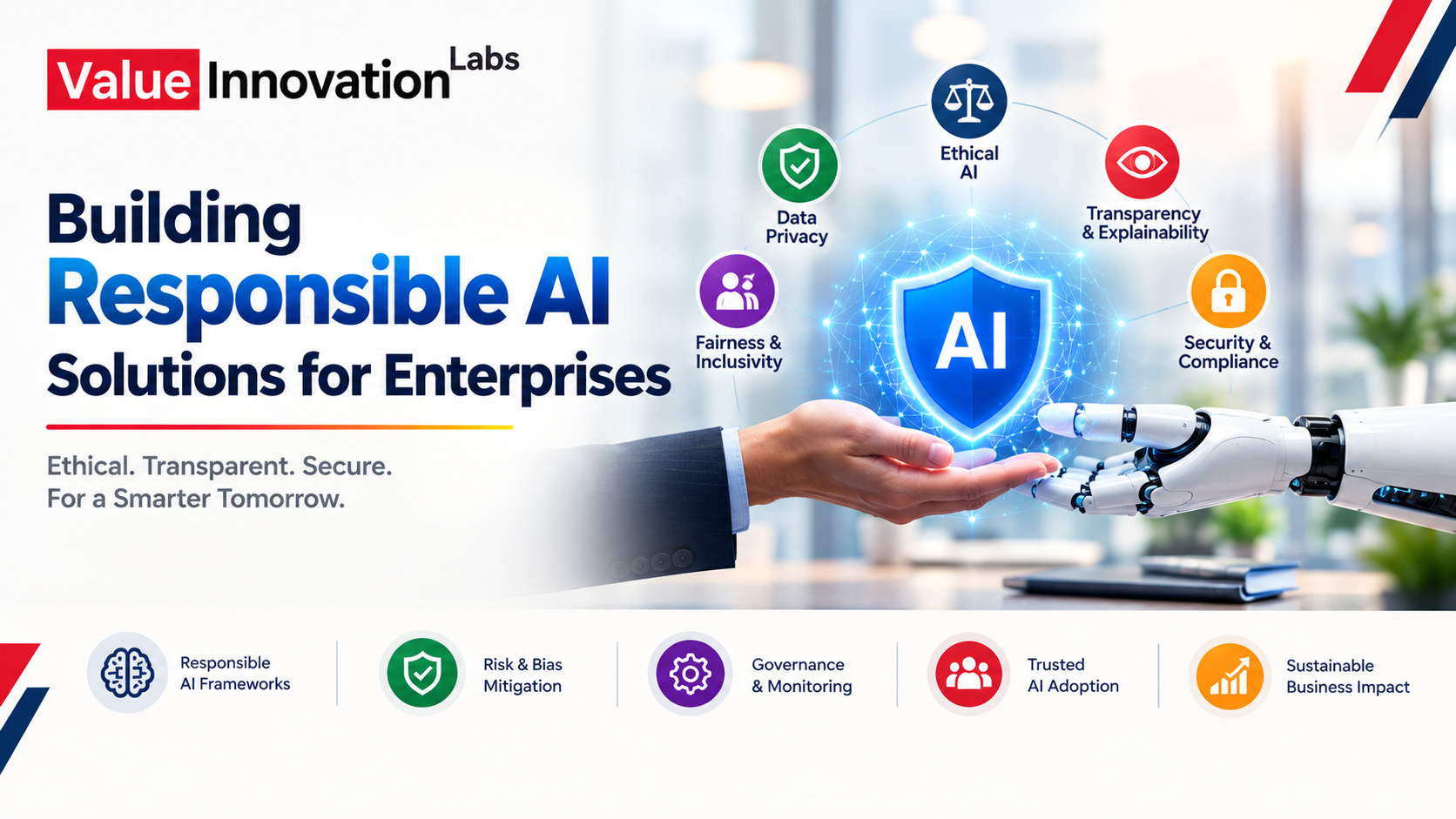
Building Responsible AI Solutions for Enterprises
Building Responsible AI Solutions for Enterprises
As artificial intelligence becomes a standard part of enterprise operations, a new kind of pressure has emerged alongside the excitement: the pressure to get it right. A biased hiring algorithm, an opaque lending decision, or a chatbot that mishandles sensitive data can damage customer trust and expose a business to serious legal and reputational risk. Speed and innovation matter, but so does responsibility.
Building responsible AI solutions for enterprises isn’t about slowing down adoption, it’s about building AI systems that are fair, transparent, secure, and genuinely trustworthy from the start. In this guide, you’ll learn what responsible AI actually means in practice, why it matters for enterprises, and the concrete steps businesses can take to build AI systems that are both effective and ethical.
What Does “Responsible AI” Actually Mean?
Responsible AI refers to the practice of designing, developing, and deploying artificial intelligence systems in ways that are fair, transparent, secure, and accountable. It’s not a single feature or checklist item, but an ongoing approach that touches every stage of an AI system’s lifecycle, from data collection to deployment and monitoring.
Why “Responsible” Is Different From “Compliant”
Compliance means meeting legal requirements. Responsible AI in enterprise settings goes further, aiming to build systems that are ethical and trustworthy even in situations the law hasn’t fully caught up to yet.
Why Responsible AI Matters for Modern Enterprises
Understanding the stakes helps explain why this topic deserves serious attention from leadership, not just technical teams.
Protecting Customer and Employee Trust
When customers or employees feel an AI system is unfair or opaque, trust erodes quickly, and rebuilding it can take far longer than the initial damage.
Reducing Legal and Regulatory Risk
Regulations around AI use, data privacy, and algorithmic decision-making continue to evolve across different regions. Building responsible AI solutions proactively reduces the risk of costly violations down the line.
Avoiding Reputational Damage
A single widely publicized AI failure, such as biased outcomes in hiring or lending, can cause lasting reputational harm that affects customer trust and brand value for years.
Supporting Long-Term Business Sustainability
Enterprises that build responsible AI practices early are better positioned to scale AI confidently, without constantly firefighting ethical or legal issues later.
Core Pillars of Responsible AI for Enterprises
Building trustworthy AI systems requires attention to several interconnected areas.
1. Fairness and Bias Mitigation
AI models can unintentionally learn and amplify biases present in historical data, leading to unfair outcomes for certain groups.
Identifying Bias in Training Data
Enterprises should regularly audit training data for imbalances or historical biases that could unfairly influence model outcomes, particularly in hiring, lending, or customer scoring systems.
Testing for Fair Outcomes
Beyond checking the data, enterprises should test model outputs across different demographic groups to confirm the system performs fairly in practice, not just in theory.
2. Transparency and Explainability
Employees, customers, and regulators increasingly expect to understand how AI systems reach their conclusions.
Using Explainable AI Techniques
Where possible, enterprises should use models and tools that can explain their reasoning in understandable terms, rather than relying solely on “black box” systems that are difficult to interpret.
Clear Communication With Users
When AI is used to make decisions that affect customers or employees, enterprises should clearly disclose that AI is involved and explain how decisions are made.
3. Data Privacy and Security
Responsible AI solutions must protect the sensitive data they’re built on and the data they process.
Minimizing Data Collection
Enterprises should collect only the data genuinely necessary for a given AI system, reducing exposure in the event of a security incident.
Strong Access Controls
Limiting who can access sensitive data and AI model outputs reduces both internal misuse and external security risks.
4. Accountability and Human Oversight
No AI system should operate without clear ownership and the ability for humans to intervene.
Assigning Clear Ownership
Every AI system deployed in an enterprise should have a designated owner responsible for monitoring its performance and addressing issues.
Keeping Humans in the Loop
For high-stakes decisions, such as loan approvals or hiring recommendations, human review should remain part of the process rather than full automation.
5. Ongoing Monitoring and Governance
Responsible AI isn’t a one-time setup, it requires continuous attention as systems and data evolve.
Establishing an AI Governance Framework
Enterprises should create clear internal policies defining how AI systems are approved, monitored, and retired when necessary.
Regular Audits and Updates
AI models should be reviewed periodically to catch performance drift, emerging bias, or outdated assumptions that could affect fairness or accuracy over time.
Common Challenges in Building Responsible AI Solutions
Even well-intentioned enterprises face real obstacles when putting responsible AI principles into practice.
Balancing Innovation Speed With Caution
Teams under pressure to move quickly may be tempted to skip thorough testing or bias checks, increasing long-term risk.
Limited In-House Expertise
Not every enterprise has specialists trained in AI ethics or responsible AI governance, making it harder to implement best practices consistently.
Lack of Standardized Regulations
Since AI regulations vary across regions and are still evolving, enterprises often need to set their own responsible AI standards rather than relying solely on external guidance.
Difficulty Measuring “Fairness”
Fairness can be defined and measured in different ways, and enterprises must make thoughtful, context-specific decisions about which standards apply to their systems.
Practical Steps to Build Responsible AI in Your Enterprise
A structured approach makes responsible AI far more achievable than attempting to address everything at once.
Start With a Responsible AI Policy
Create a clear, documented policy outlining your organization’s principles for fairness, transparency, privacy, and accountability in AI systems.
Involve Diverse Perspectives Early
Include voices from different departments, backgrounds, and roles when designing and testing AI systems to catch potential blind spots early.
Test Before Full Deployment
Run thorough testing, including bias and fairness checks, before rolling out AI systems to real customers or employees at scale.
Build in Human Review Points
Ensure high-stakes AI decisions include a clear point for human review, rather than fully automating sensitive outcomes.
Monitor Continuously After Launch
Responsible AI doesn’t end at deployment. Set up ongoing monitoring to catch issues early and adjust systems as needed.
Frequently Asked Questions
Is responsible AI only necessary for large enterprises? No. Businesses of all sizes that use AI for decisions affecting customers or employees, such as hiring or lending, should apply responsible AI principles to reduce risk and build trust.
Does building responsible AI slow down innovation? Not significantly, if integrated from the start. Addressing fairness, transparency, and governance early often prevents costly delays and failures later in the process.
What’s the biggest mistake enterprises make with responsible AI? The most common mistake is treating responsible AI as an afterthought, addressed only after a problem arises, rather than building fairness, transparency, and oversight into the system from the beginning.
Conclusion
Building responsible AI solutions for enterprises isn’t about slowing innovation, it’s about building AI systems that are fair, transparent, secure, and genuinely trustworthy, which ultimately protects both the business and the people it serves, and enterprises that prioritize these principles early are the ones best positioned for sustainable, long-term AI success; if you’re looking to grow your career in AI governance or responsible technology roles, explore the latest openings on Rojgar.com, and for further reading, check out McKinsey’s insights on responsible AI
Building Responsible AI Solutions for Enterprises As artificial intelligence becomes a standard part of enterprise operations, a new kind of…